Electrical Theory and Circuits
Go beyond memorizing formulas and actually understand how electricity behaves — from DC circuit analysis and AC theory to transformers and power factor correction.
About this course
Details
Skills you'll gain with this course
DC Circuit Analysis
Apply Kirchhoff's Laws and Thevenin's theorem to solve multi-loop circuits with multiple voltage and current sources.
AC Circuit Math
Calculate impedance, phase angles, and resonant frequency for AC circuits, and interpret what those numbers mean in practice.
Power Factor Analysis
Distinguish between real, reactive, and apparent power, and determine the capacitor bank needed to correct poor power factor.
Transformer Sizing and Configuration
Calculate primary and secondary voltages, currents, and VA ratings, and identify the winding configurations used in power distribution.
Three-Phase Power Systems
Analyze wye and delta configurations, calculate line and phase quantities, and understand why three-phase power dominates commercial and industrial systems.
Syllabus
4 Units • 6 Lessons • 4 Assessments
Ways To Learn Included
Every lesson enables you to learn in a variety of ways.
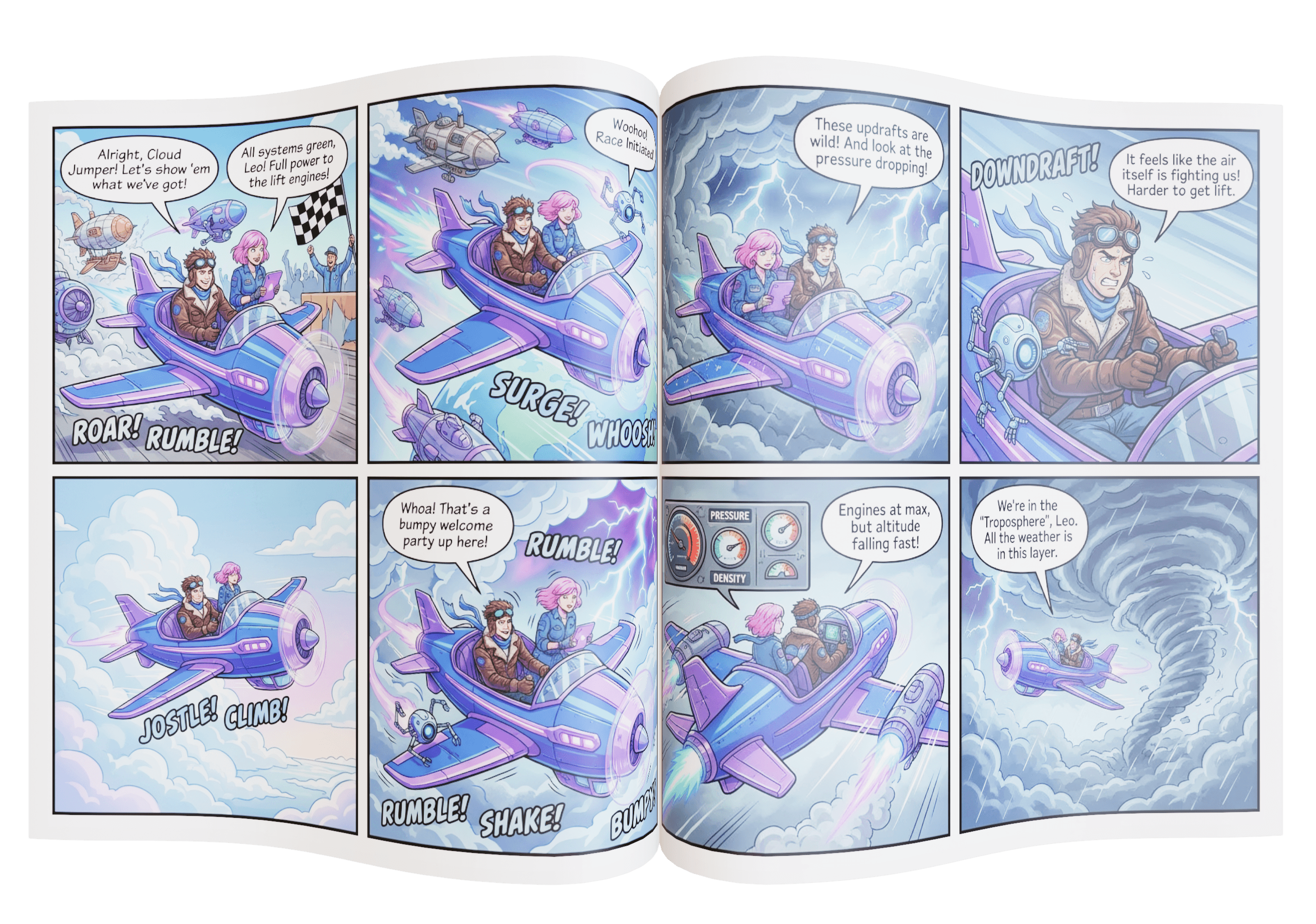
These gases, such as carbon dioxide and methane, play a crucial role in regulating Earth's temperature. But what exactly are they, and how do they work? Let's find out.
FAQ

Similar Courses

AI For All
AI is reshaping every field, and this course gives you a clear, honest picture of how it actually works, where it's heading, and what that means for you.

AI for Creators (Without Losing Your Voice)
Learn how to use AI tools to do more creative work, faster, without sounding like every other creator who's using the same tools.

Build Your First App with AI
Learn to build and ship a real app using AI tools, no coding experience required, and walk away with something live that solves an actual problem.

How to Talk to AI (And Actually Get What You Want)
Most people type questions into AI and hope for the best. This course teaches you how to actually communicate with it — so you spend less time reprompting and more time getting work done.